Shipping Leather Booth Seating and Lounge Furniture: Lead Times, Wrapping and Import
How leather booths, club chairs and chesterfields travel from Foshan to bars and cigar lounges in the US, UK and Gulf: lead times, wrapping and customs.
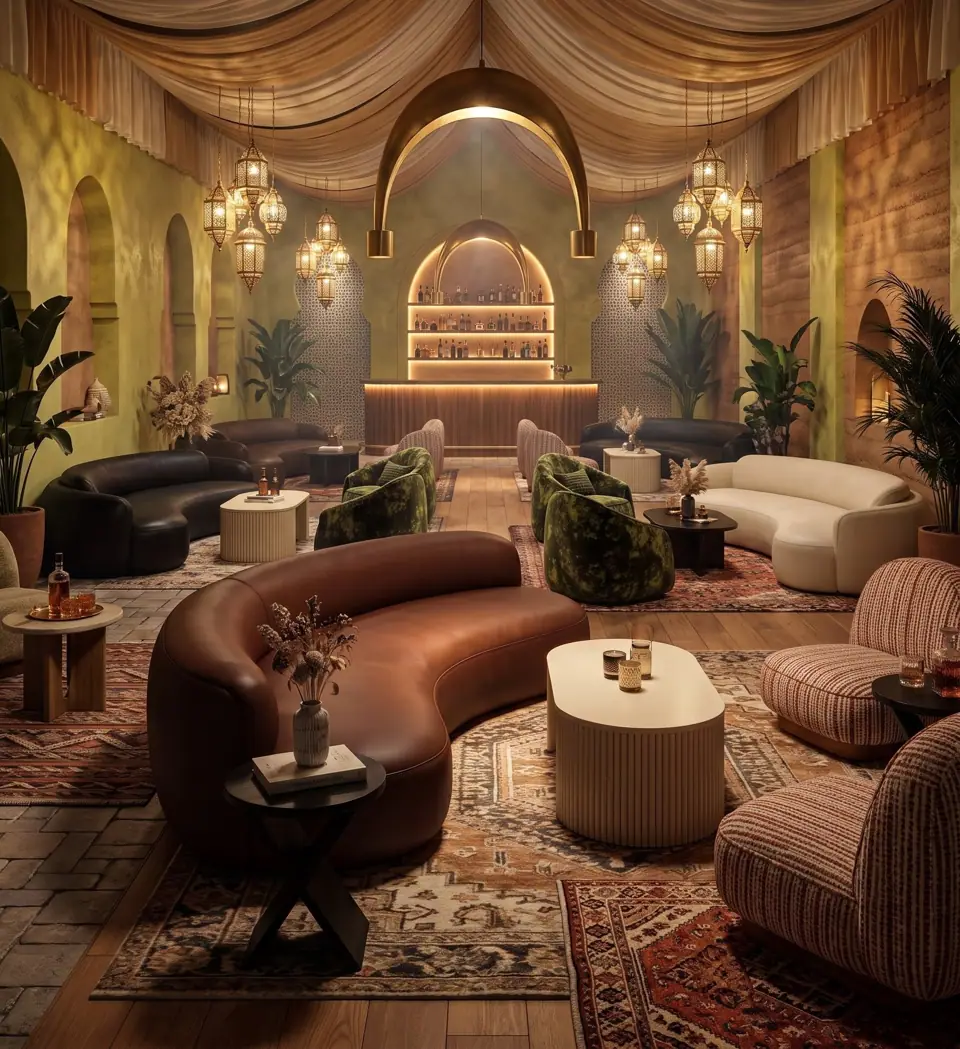
Short answer: Leather booth seating and lounge furniture typically takes 30-45 days to build for standard designs and 45-60 days for custom work after drawings and sample are approved, then sea freight, customs and delivery. Leather is wrapped in breathable layers, never sealed wet in plastic, and booths travel as sections sized to your entrance. Done right, a cigar lounge's seating arrives looking the way it did in the workshop.
Lounge & Leather (a line by EASEN Commercial Furniture) makes leather booths, club chairs, chesterfields and bar stools in our own production base in Lecong, Foshan. Leather is the material that suffers most from careless shipping: creases, pressure marks, mould from trapped moisture, scuffed piping. This guide is about avoiding all four.
What happens to leather in a shipping container?
A sea container is a sealed steel box crossing climate zones. Inside, temperature swings and humidity can condense on the ceiling and drip, a problem shippers call container rain. Leather reacts to several things on the journey:
| Risk | What it does to leather | How we guard against it |
|---|---|---|
| Trapped moisture | Mould spots, tide marks | Breathable wrap first, desiccant in the load, dry packing |
| Pressure | Permanent creases, crushed buttons | No stacking weight on upholstered faces; cartons and frames carry load |
| Abrasion | Scuffed piping and edges | Foam corner guards, soft sleeve between leather and carton |
| Heat | Dried, stiff surface | Conditioned before packing |
| Contact with plastics | Color transfer, sticky marks | Acid-free paper or cotton layer before any film |
Our wrapping order
- Leather surfaces conditioned and checked.
- Acid-free paper or soft cotton sheet on show faces and tufting.
- Foam guards on arms, corners, piping and nailhead trim.
- Outer protective film, not tight on the leather itself.
- Export carton, and for long or heavy pieces a timber frame or crate.
- Desiccant packs in the container.
Any timber crating or pallets are ISPM 15 heat-treated and marked.
Booths: sections, not monoliths
Deep-buttoned and channel-back booths are heavy and bulky. A long run like the Stillroom Tufted Leather Booth is split into sections at points drawn on the shop drawing, so tufting lines and channels continue across the joint. Horseshoe and curved booths are divided into segments that follow the radius.
Tell us about your access: a speakeasy reached by a narrow stair, a basement cigar room, a rooftop bar. Section sizes follow the tightest point.
| Piece | Typical packing | Site work |
|---|---|---|
| Straight leather booth | Sections, back sometimes detached | Join and fix |
| Horseshoe or curved booth | Radius segments | Bolt into a continuous curve |
| Club chair | Assembled, wrapped, boxed | Unbox |
| Chesterfield sofa | Assembled, feet often off | Fit feet |
| Bar stool | Assembled or KD footrest | Fit footrest |
| Side and cocktail tables | Top and base apart | Assemble |
Where the weeks go
| Stage | Notes |
|---|---|
| Leather selection | Hides chosen, or your COL received at the factory |
| Shop drawings | Every booth run, arm profile, tufting pattern |
| Sample | Arm, corner or full chair, on request |
| Production | About 30-45 days standard, 45-60 days custom, per your quote |
| Inspection and packing | Photos and video, then wrapping |
| Freight and clearance | Route- and port-dependent |
Leather adds two variables. Natural hides vary in grain and shade, so we sort hides for each order to keep a room consistent. And if you supply your own leather (COL), production cannot start until it reaches us; build that into your plan.
Aniline and semi-aniline leathers, the ones that patina beautifully under low bar light, are also the most sensitive to marks in transit. If you have chosen one, ask for the extra paper layer on every show face and allow a little more time for us to sort hides by shade across a long booth run.
Which shipping terms suit a bar or lounge fit-out?
- FOB (China port): you control freight through your own forwarder.
- CIF (destination port): ocean freight and insurance included to your port.
- DDP (your venue): delivered with clearance and duties included, where available for your destination.
Quoted on request. For leather, check that cargo insurance covers damage from moisture, not only total loss.
LCL or FCL? A few club chairs can go LCL in a shared container. A whole lounge, with booths and sofas, generally needs a dedicated 20ft, 40ft or 40ft high cube. A dedicated container is handled less, which is kinder to leather.
Importing into the United States
- ISF must be filed before loading in China; your broker or forwarder does it.
- Entry is lodged by a licensed customs broker against a customs bond in your name.
- Leather seating sits in the furniture chapter of the tariff schedule. Furniture of Chinese origin is also exposed to additional Section 301 tariffs, a regime that has been amended repeatedly; check the current position with your broker.
- West Coast ports are the direct route from South China; East Coast venues can compare all-water and West Coast-plus-rail options.
Importing into the UK
A GB EORI number is required. Customs duty may apply depending on classification, and import VAT is charged, usually reclaimable for VAT-registered businesses. A customs agent files the declaration. Upholstered furniture placed on the UK market also has fire safety obligations; specify the requirement at the quote stage so foams and interliners are chosen to suit.
A note on the Gulf
Shipments to the Gulf states clear through each country's own customs authority, with customs duty and VAT where applicable and documentation requirements that differ by country. Use a local clearing agent, ask them which documents must accompany the commercial invoice, and confirm whether any product conformity paperwork applies to your goods. High ambient heat also makes it worth unpacking leather promptly in a cool space.
This section is general information only, not customs advice.
Payment and inspection
A deposit starts production; the balance is paid before shipment. Before the balance, you receive photos and video of finished pieces under good light: grain, color match between pieces, tufting, piping, nailheads. You are welcome to send a third-party inspector to the factory as well.
Unpacking leather seating: a short routine
- Unpack in a dry, cool room, not on a loading dock in the sun.
- Remove outer film first, then paper layers by hand; no blades near the leather.
- Let pieces rest unwrapped for a day before installation so minor packing creases relax.
- Check every piece against the inspection photos.
- Wipe with a dry, soft cloth; condition per the care sheet before opening.
- Keep a few offcuts of the same leather for future repairs.
Mistakes that mark leather in transit
- Tight plastic straight on leather. Traps moisture and can transfer color.
- Stacking chairs on sofas. Pressure marks rarely fully recover.
- Leaving cartons in a hot store room. Leather dries and stiffens.
- Cutting cartons open with a knife. The fastest way to scar a new booth.
- Late COL. Your leather arriving late moves the whole schedule.
See the leather booths and club chairs collections for pieces that ship as part of a lounge package.
FAQ
How long does custom leather booth seating take?
Upholstering and finishing generally take 30-45 days for standard designs and 45-60 days for custom commissions after drawing and sample approval, with transit and clearance on top. Confirmed in each quote.
Will leather crease during shipping?
Light packing creases relax after unwrapping. Deep creases come from pressure, which our packing avoids by keeping weight off upholstered faces.
Can you ship leather furniture to the Gulf?
Yes, on terms quoted per project. A local clearing agent should confirm documents and duties for your country.
Can I supply my own leather?
Yes. COL must reach the factory before cutting, so send it early.
Tell us about your bar or lounge: a floor plan, seat count and a few reference images are enough to start. We reply with a seating proposal and a quote.
Request a quote